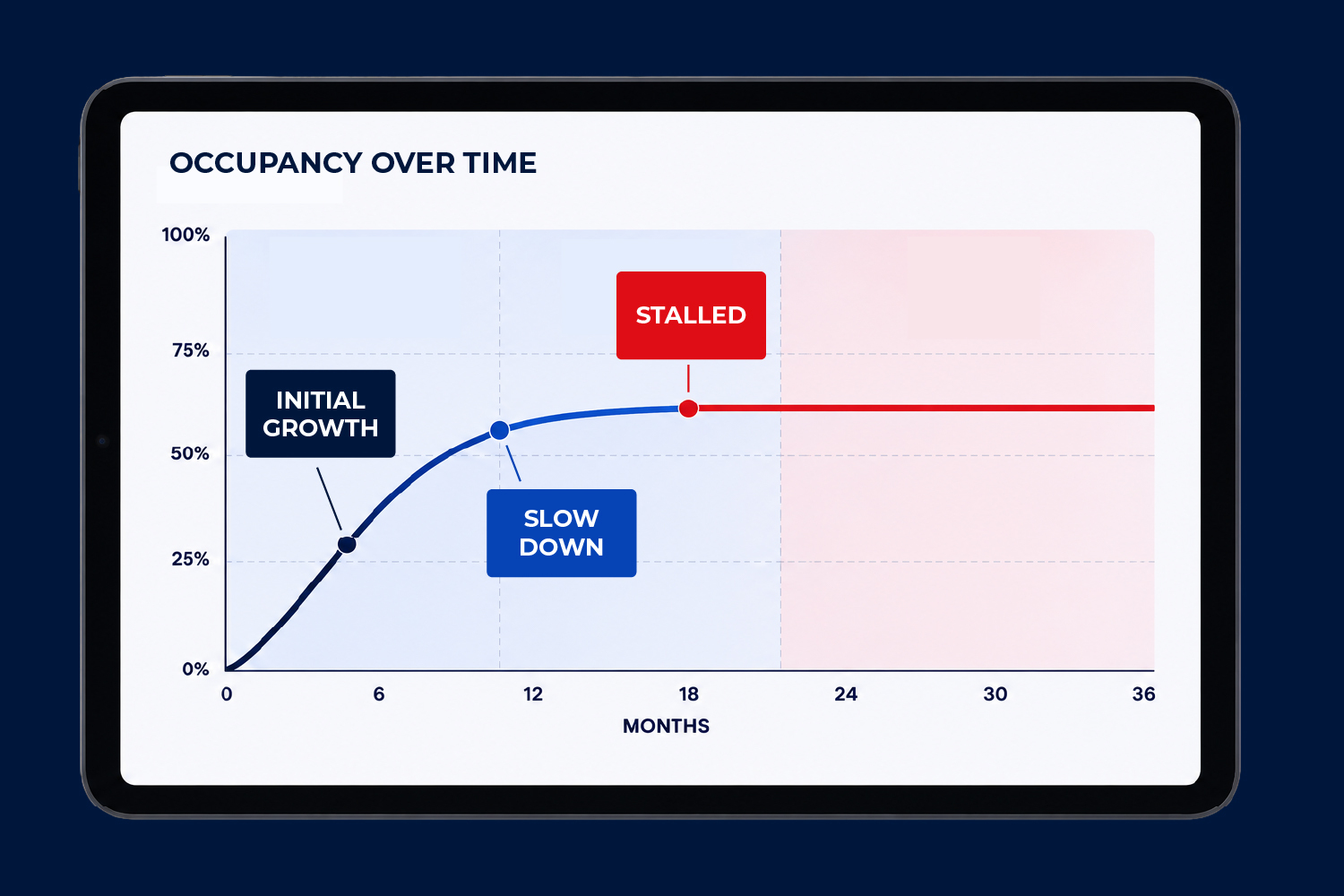
For most self-storage owners, a full rent roll feels like success. But occupancy is a lagging indicator. If there’s a gap between rented units and units that are actually paying, NOI will quietly erode.
This is a delinquency problem. And by the time the numbers are bad enough to demand attention, thousands in revenue could be sitting uncollected.
Not only is delinquency a cashflow killer, but the resources required to manage it can be significant: building outreach messages, following up, coordinating lien notices, and managing auctions takes a lot of time.
For owners who also have tenants they know personally, it's uncomfortable. And even when collections happen, it’s too slow, giving balances time to grow and making auction more likely.
That's the problem StorBill was built to solve.
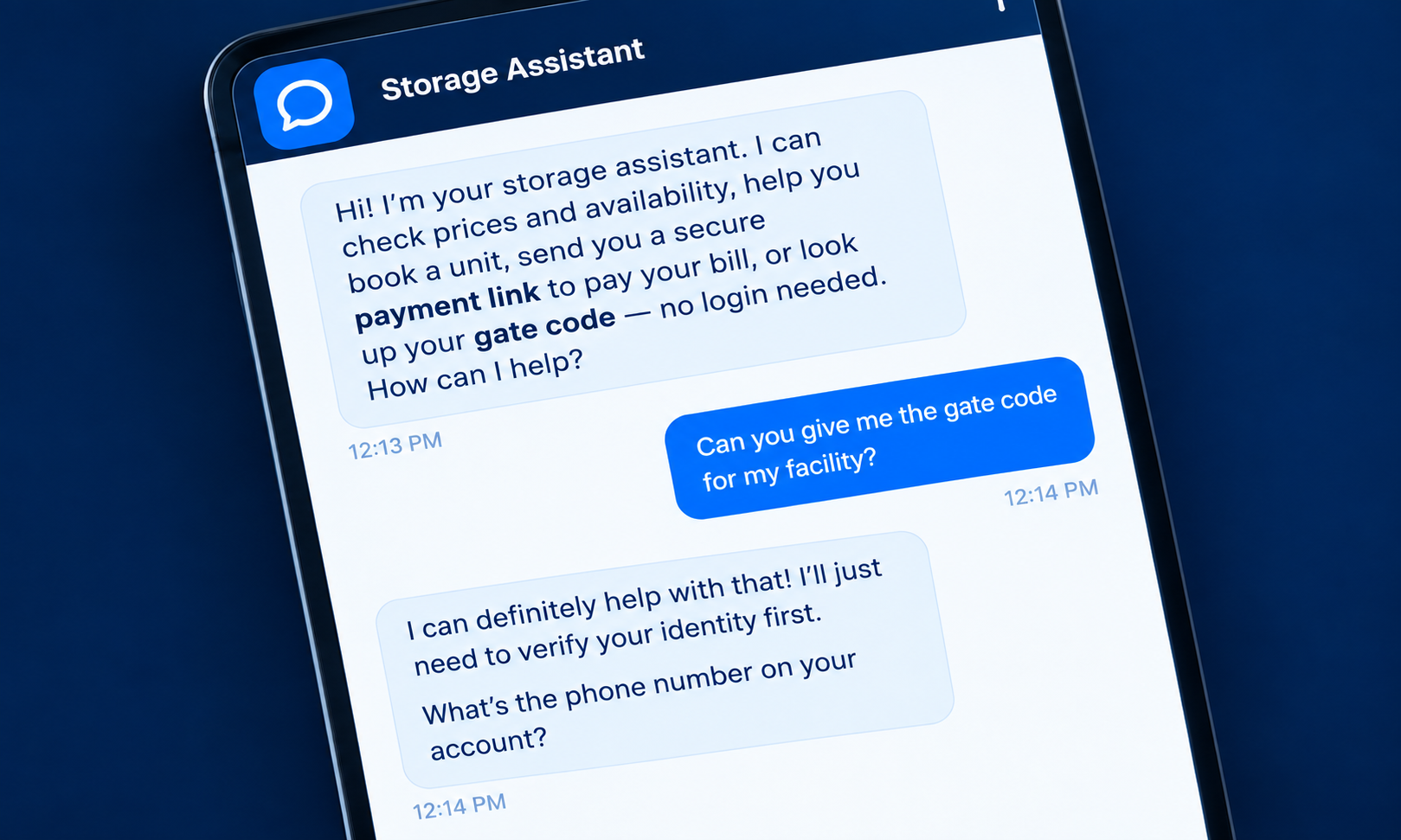
We developed StorBill after seeing this pattern repeat across facilities we manage. We repeatedly saw the delinquency process break down when tenants are asked to log into clunky payment portals. No one remembers their passwords, so balances don’t get paid.
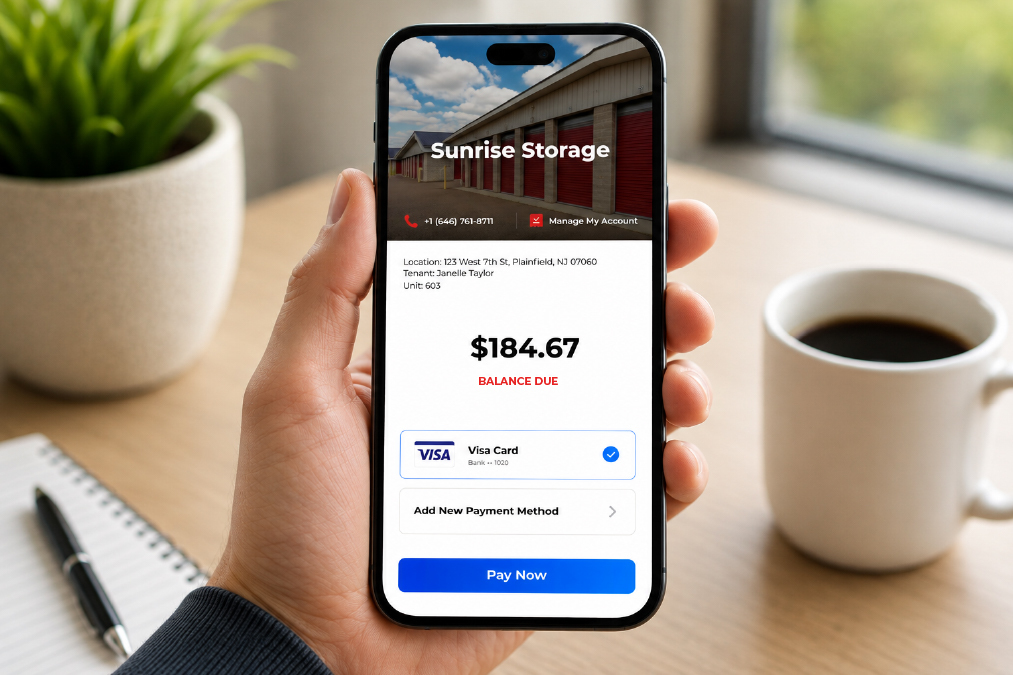
StorBill automates the outreach and removes friction from the payment process by sending a personalized, e-commerce style link for every delinquent account. Tenants don’t have to log in, and they pay significantly more often.
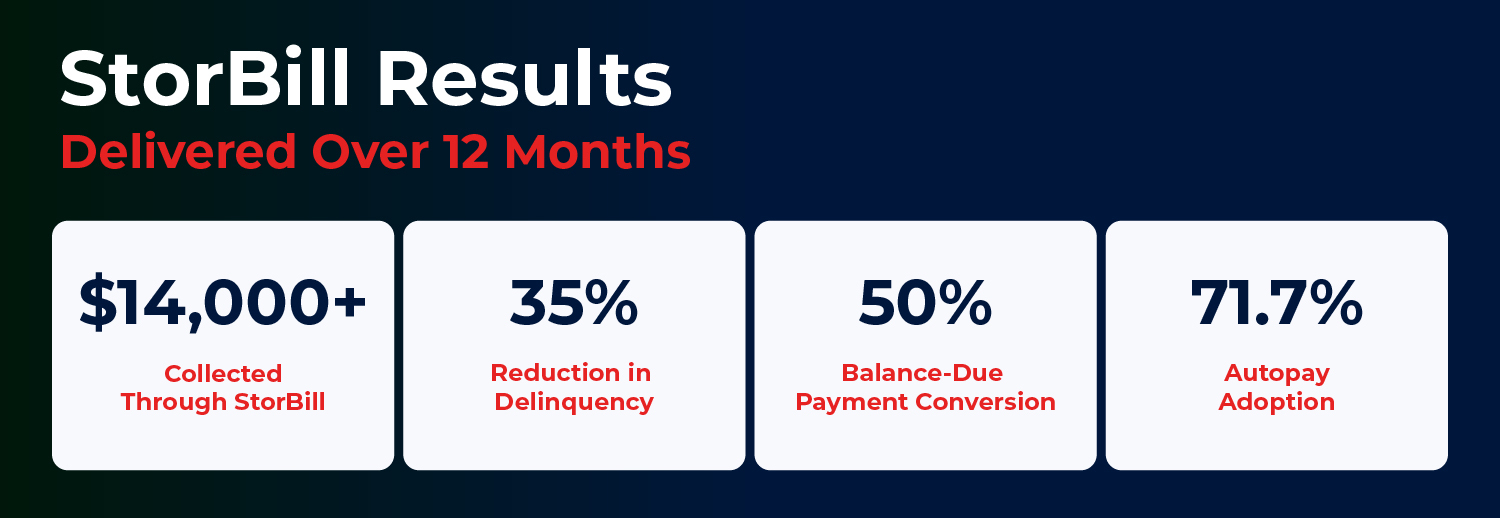
StorBill also boosts autopay adoption so delinquency decreases over the long term.
In 2025, we started managing a 200+ unit Midwest facility that was overwhelmed with 57% delinquency. Here are the results StorBill helped delivered over 12 months:
This is the story of how we revamped this facility’s payment process, unlocked more revenue, and permanently decreased delinquent accounts.
When we began managing this facility in April 2025, delinquency was also a major concern with 57% of the rent roll delinquent, which amounted to more than $5,000 in outstanding balances. Physical occupancy was 64% and economic occupancy trailed further behind at 55%.
As a third-party self-storage management company, one of our first priorities was putting more of the facility's available units to work. Through stronger leasing efforts and proactive management, we began building occupancy and generating more rental activity across the facility.
But getting more tenants into units is only one side of managing a growing facility. More occupied units also means more tenant accounts to stay on top of, more payments to track, and inevitably, more tenants who fall behind.
Even as we made progress on the leasing side and continued managing collections through StorBill, delinquency remained an ongoing challenge. As 2025 progressed, outstanding balances continued to build, eventually peaking at more than $14,000.
At that point, the focus shifted from just getting more units rented. We needed to make sure more of the revenue tied to growing occupancy was making its way back into the business.
That meant doubling down on the collections process with StorBill.
Instead of relying on one-off follow-ups with delinquent tenants, StorBill automated email and SMS outreach to consistently remind tenants of their current balance.
The goal was to make it harder for overdue balances to sit untouched and make it easier for tenants to actually pay.
The combination of continuous reminders and an e-commerce-style checkout experience significantly improved the success of delinquency follow-up.
The facility was no longer watching outstanding balances continue to pile up. It was actively recovering revenue and bringing delinquency back under control.
Delinquency management requires repeated communication, and StorBill gave our team a way to keep that communication moving without turning every touchpoint into a manual task.

From February 2025 through August 2026, StorBill sent 3,100+ automated notifications to tenants through email and SMS. Those messages ranged from balance-due notifications and payment links to reminders designed to keep payments from becoming delinquent.
And tenants were not just receiving the messages; they were taking action:
StorBill delivered a 50% balance-due payment conversion. Half of every tenant who received a notification went on to complete a payment. Those payments alone accounted for more than $14,000 in collected revenue.
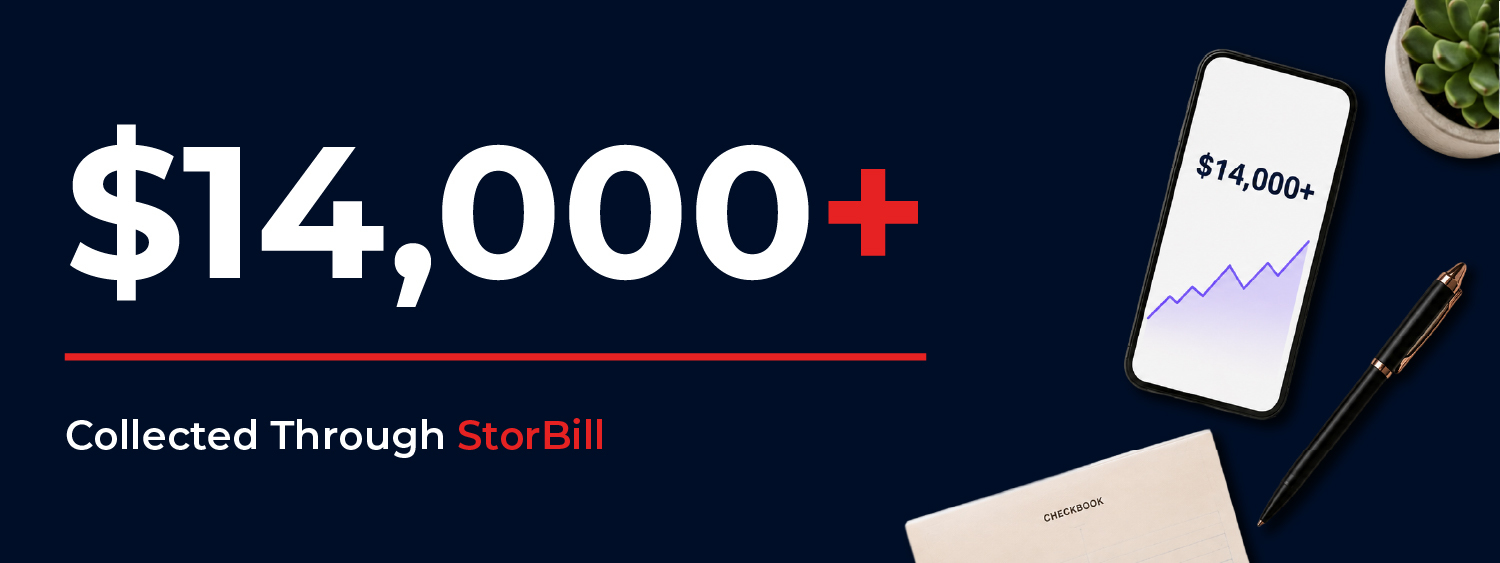
Getting delinquency under control directly correlated to improved financial performance. Stronger leasing put more tenants into units, while more consistent collections ensured more of the revenue generated by that occupancy was actually being realized.
Over time, that progress began showing up in the relationship between physical and economic occupancy. After a bumpy stretch of delinquency, the gap between the two began to close as occupancy strengthened and more outstanding revenue was collected.
Here are the most up-to-date results at the time of writing:
Delinquency will always be part of managing a self-storage facility, but it does not have to become a drain on revenue or a time-consuming burden for your team.
StorBill brings that approach together by automating the repetitive parts of delinquency management, optimizing balance-due payment conversion, and increasing auto-pay sign up.
This is a core part of how we operate a White Label Storage. We are constantly looking for ways to use technology to make self-storage operations more efficient and profitable, whether that means strengthening collections, improving revenue management, or giving owners greater visibility into facility performance.
Want to take a more proactive approach to delinquency at your facility? Schedule a demo to see StorBill in action.