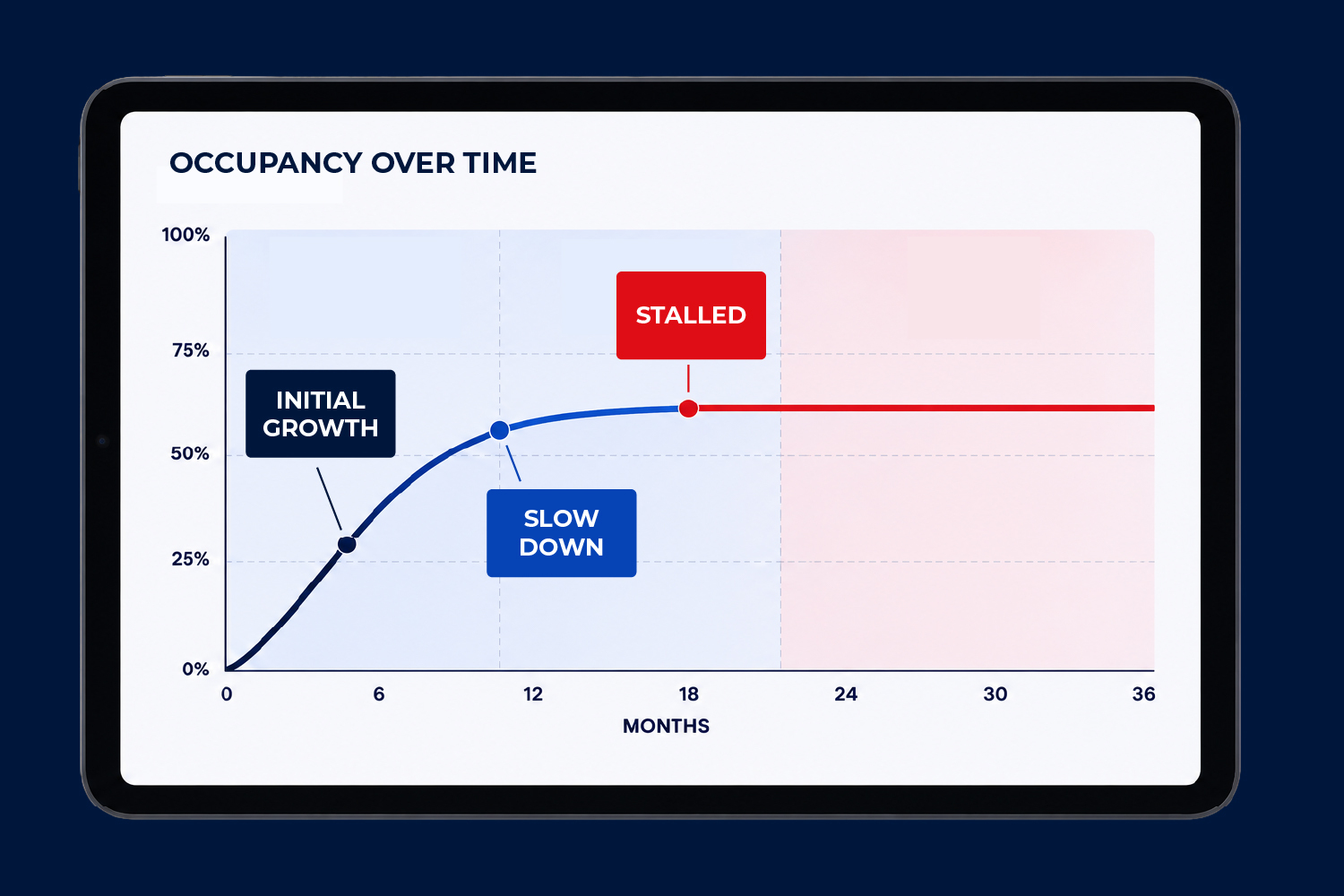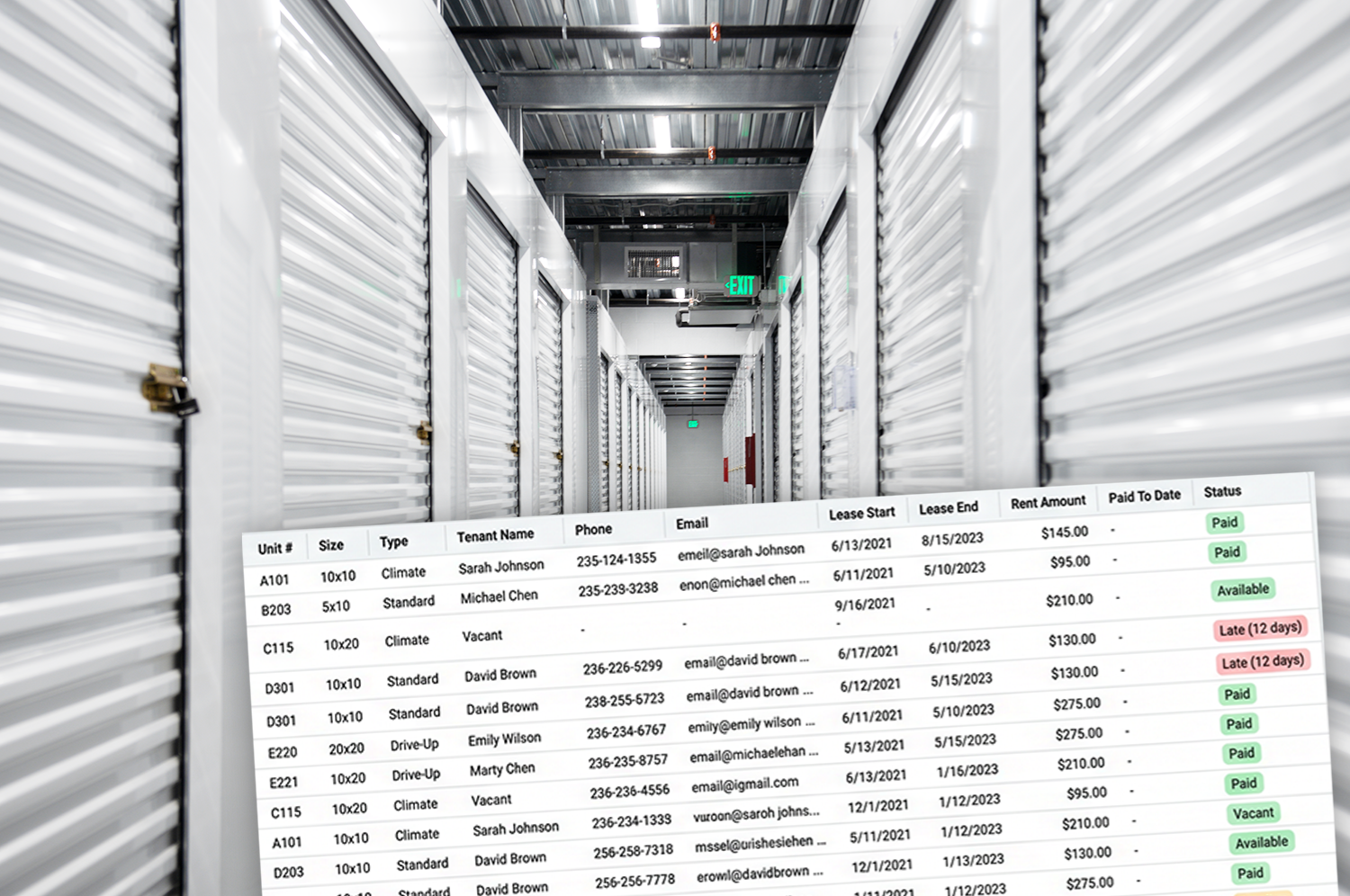
In the last piece we argued that when you buy a self-storage facility, you aren’t really buying the tenants. You’re buying the facility’s ability to attract new ones, because the existing rent roll will largely turn over within a couple of years.
That raises the obvious next question: if the rent roll isn’t the asset, what actually is?
If you’re stripping the existing rent roll out of your underwriting, you need to replace it with something. The things that actually matter are the inputs that will determine what your rent roll looks like two years from now, not what it looks like today.
Here are the top three to focus on:
The big question: Do you find the supply and demand dynamics in this town attractive? The facility you are buying is one datapoint, and maybe the most important one, but you should be able to confidently answer the broader market question, not just “what is the occupancy of my one facility at one point in time, months before I close.”
What you care about:
If every facility in the market is 92%+ occupied that tells a certain story and if the facilities are around 60% that is certainly a different story. If the facility you are acquiring is above the market occupancy is it sustainable? Why? If it is below the market occupancy why is that and are you positioned to fix it?
What’s been permitted, what’s under construction, what’s rumored. A facility that’s 95% occupied today in a market with a 400-unit new build breaking ground next quarter is not the same asset as a facility that’s 95% occupied in a market with nothing coming. The diligence period is the only time you can price in future supply before you own it.
Population growth, household formation, housing turnover, and small business density all drive storage demand. A market with flat population and a shrinking rental housing base is a market where current occupancy is a ceiling, not a floor. Be careful here as demand drivers attract new development. Restrictive zoning can be your friend in these scenarios.
If the market itself is limited, no operating improvement you make is going to change that. Supply and demand set the ceiling on what any operator can achieve in that market. Price accordingly.
The big question: How does the asset I am buying stack up against the other assets in my market? Is it nicer and newer? A good diligence exercise is to visit every facility in your competitive set and put yourself in the shoes of a potential renter. Rank them in order of where you would want to store.
If your target is coming up in the middle or the bottom, make sure you are reflecting that in your occupancy and rate assumptions, or that you have a capex plan to fix it. Also understand the visibility of your location: is it a prominent street with foot and/or driving traffic?
Imagine underwriting an apartment building and you are looking at the old run-down complex in the less nice part of town, but you are pulling rent and occupancy comps from a new development at Main and Main. You wouldn’t do it. Don’t do it with storage either.
What you care about:
Traffic count, road frontage, visibility, and proximity to the housing turnover that drives demand. This is the one input that is permanently fixed at close — you can’t move the building.
A facility that’s 70% large units in a market that rents small units doesn’t match its customer base, and you’ll spend years fighting it.
Climate-controlled units command premiums and in most markets (but not all) demand has shifted toward them. A heavily non-climate facility in a climate-demand market has a structural ceiling on achievable rates. Of course some markets prefer drive-up units with lower prices.
These are the things that drive walk-ins and first impressions. You can improve signage and landscaping but you can’t move the building off a side street.
Roof, doors, pavement, security systems. Capex you didn’t underwrite will eat into the NOI you were counting on.
The physical asset is the one thing on this list that’s effectively fixed at close. Everything you don’t like about the building is something you’re going to live with or pay to fix.
The big question: Does your operating platform give you an edge, a push, or a deficit relative to the competition? You should have a strong view on this before you close, not an assumption that “better systems” will automatically translate into better NOI.
Can you drive qualified traffic to the facility at a reasonable cost of acquisition? The seller’s historical move-ins were produced by their marketing spend and channel mix, not yours.
A meaningful percentage of storage customers still convert over the phone. If your call pick up rate and lead follow is weak, you’re leaking conversions that the seller may have been capturing.
Dynamic street rate pricing, promo discipline, and ECRI execution are the three levers that separate a facility running at 70% of its revenue potential from one running at 100%. But execution matters more than aggression — pushing rates too hard on inherited tenants’ hands market share back to your competitors.
Online reviews, Google presence, and aggregator relationships compound over time. A facility inheriting a strong reputation has an easier time retaining customers and attracting new ones than one starting from a weak one. But in any case, over time the reputation of the facility will be yours.
The operating platform is what lets you realize the NOI the market and the physical asset make possible. Without it, a good deal becomes a mediocre one. With it, a mediocre deal can occasionally be salvaged, but not always, because the market and the building still set the ceiling.
Too often when we talk to people acquiring a facility what excites them most is the belief they have an opportunity to increase rates.
Very rarely do we hear someone saying I am buying a high quality facility, in a great location, in an undersupplied market with strong demand.