
Every self-storage owner knows what a good month looks like. Full units, steady rates, phones ringing, and a sense that things are moving in the right direction. On paper, everything checks out.
Over time, though, many owners notice something feels off. Revenue is strong, but margins do not grow the way they expect. Expenses creep up. Decisions take longer. The business feels heavier to run than it should.
That pressure usually comes from operations. Not the big headline costs, but the day-to-day choices that shape how a facility runs. Staffing coverage, maintenance habits, systems, and oversight all play a role in how much revenue actually turns into profit.
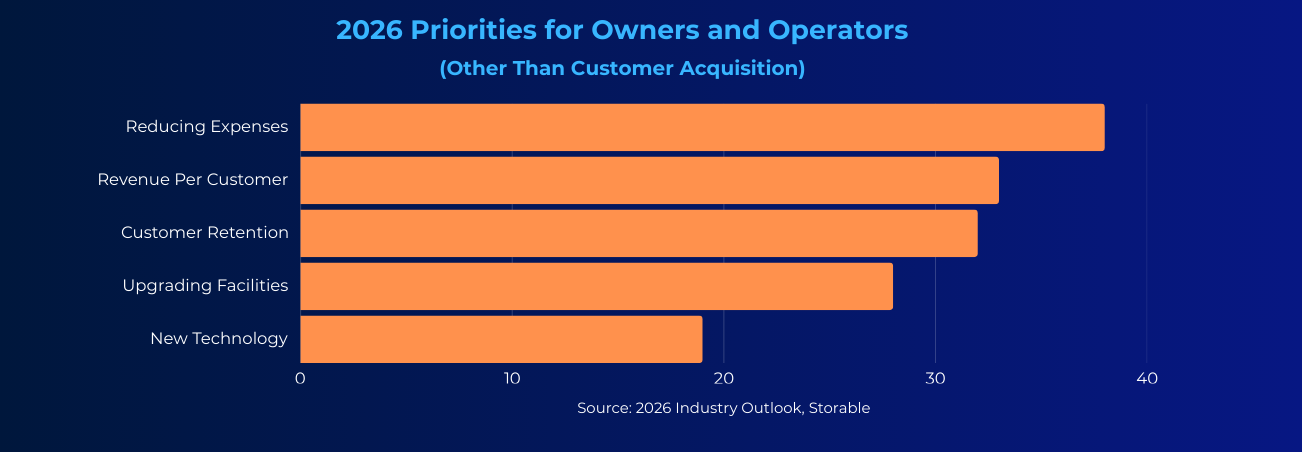
According to a survey from Storable, while customer acquisition remains a top priority, 38% of operators now rank reducing expenses as a key focus.
Understanding operational costs helps owners regain control. It creates clarity around where money is being spent, why it is happening, and how a better structure can support stronger NOI and long-term ROI
Operational costs show up everywhere. Staffing, utilities, software, maintenance, and administrative tasks all fall into this category. If it supports daily operations, it likely lives here.
To keep things manageable, it helps to think about operational costs in two simple buckets.
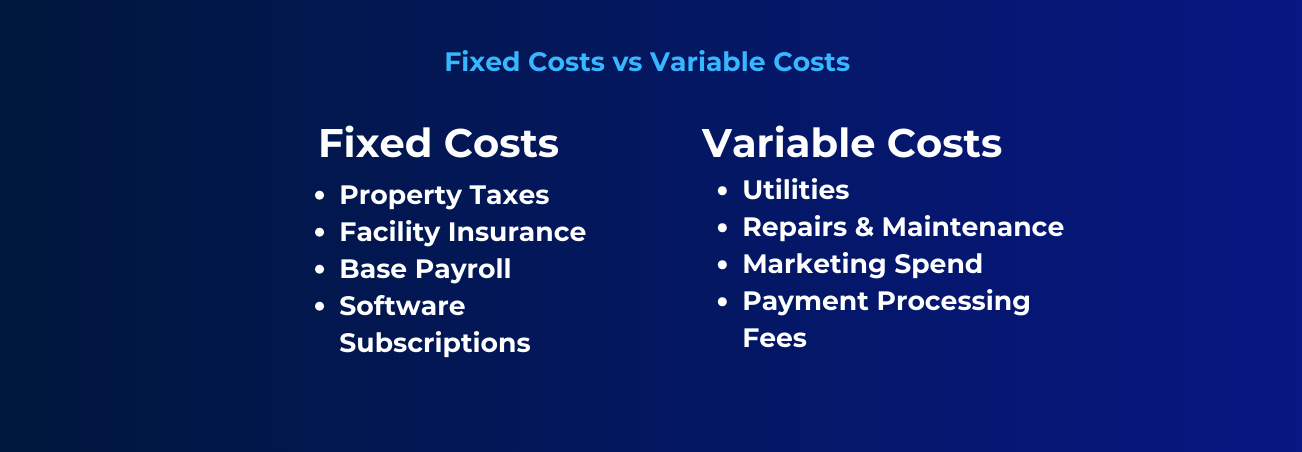
1. Fixed costs are the expenses that stay largely the same month to month.
These costs show up whether the facility is full or half empty. Property taxes, insurance, base payroll, and certain software subscriptions typically fall into this category. They form the baseline cost of keeping the business open.
2. Variable costs change based on activity, usage, and demand.
Utilities tend to rise as occupancy increases. Credit card processing fees grow as more tenants pay online. Maintenance and repairs can fluctuate depending on wear and tear, weather, and how proactive upkeep has been.
This is where the numbers start to matter. In self-storage, facility value is closely tied to NOI. When operations are inefficient, profit erodes. When operations are structured and intentional, more revenue flows through to the bottom line.
The challenge is that inefficiencies rarely feel urgent. A wasted hour or a small repair can seem harmless in isolation, but over time, those patterns add up and begin to weigh on performance.
Most owners are pretty good at spotting the big expenses. If your property tax jumps significantly, you notice. But operational creep? That happens in the shadows. It’s usually not one bad decision, but a series of habits that feel normal until you look at the P&L statement at the end of the year.
Here are some of the most common areas where operational costs tend to drift higher than expected, even in otherwise well-run facilities:
Labor is often one of the largest operating expenses, and it is also one of the easiest places for waste to hide. When one site manager is expected to handle every situation, costs climb without improving service.
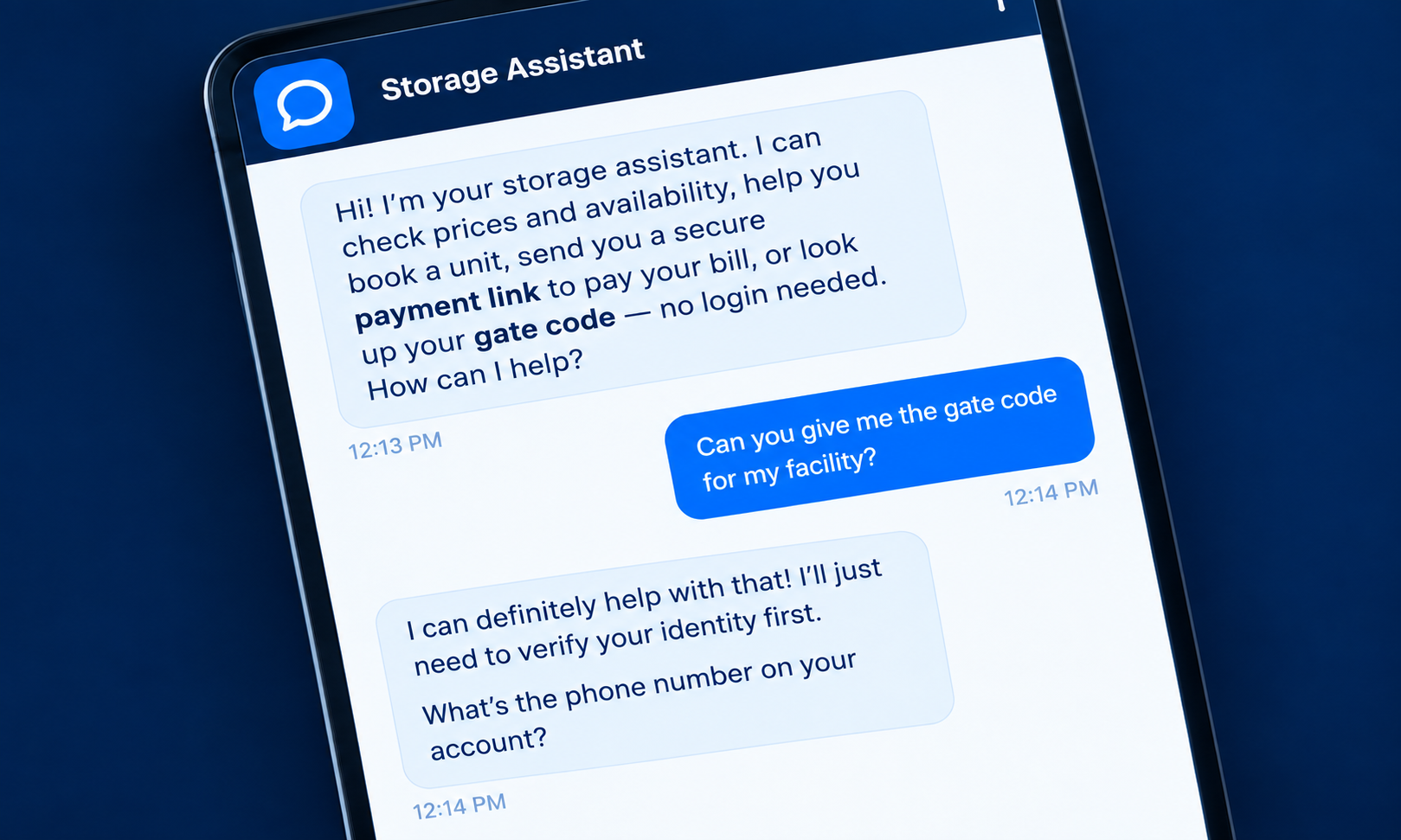
In self-storage, support needs to be available at all hours, but that does not mean every moment requires the same type of coverage. By setting up on-demand support that functions without relying solely on on-site staff, labor costs can be managed more intentionally without sacrificing service.
Handling tasks manually can feel efficient at first. Sending invoices, unlocking gates, tracking units, and entering data all seem manageable early on. Over time, those tasks demand consistent attention and introduce room for error. Administrative work pulls focus away from marketing and strategy, creating an opportunity cost that is easy to overlook.
That time adds up quickly. Research from Inside Self Storage shows that operators using comprehensive management systems often save the equivalent of a full work week each month and report labor cost reductions of 25% to 40%, largely due to automated payments, reduced delinquencies, and centralized reporting.
Delaying maintenance often feels like a way to preserve cash. In reality, it tends to have the opposite effect. Small issues turn into emergency repairs, service calls cost more, and downtime disrupts the tenant experience. Over time, reactive maintenance creates more expense than it avoids.
Without visibility into performance metrics, decision-making becomes a matter of guesswork. When marketing spend, utility usage, or occupancy trends are not closely tracked, small issues like rising delinquency, gradual increases in utilities, and underperforming campaigns linger longer than they should. Lack of data makes it harder to course-correct before costs escalate.
When repairs and services are handled on the fly, pricing becomes unpredictable. Relying on whoever is available at the moment often means paying retail rates and missing opportunities for consistency or volume pricing. Over time, this approach increases operating costs unnecessarily.
So what does a well-run operation for your storage facility actually look like once the dust settles?
Think of it like setting up a kitchen. When everything has a place, cooking feels easier and faster. When it does not, even simple meals turn into a mess. Operations work the same way. The more intentional the setup, the less effort it takes to keep things running smoothly.
While every facility is different, there are a few foundational steps that consistently help control operational costs over time.
Effective staffing starts with recognizing that availability and physical presence are not the same thing. Well-run operations ensure tenants have access to help whenever they need it, whether that support is delivered on-site or through centralized, remote management coverage.
For example, a facility might have on-site staff during peak move-in hours (weekends, late afternoons) but use remote call center support for questions about payments, gate codes, or general inquiries during slower weekday mornings. This ensures someone always answers the phone without paying for a full-time employee on-site during hours when foot traffic is minimal.
By separating service availability from the presence of on-site staff, facilities can maintain consistent support without forcing every interaction into the most expensive structure.
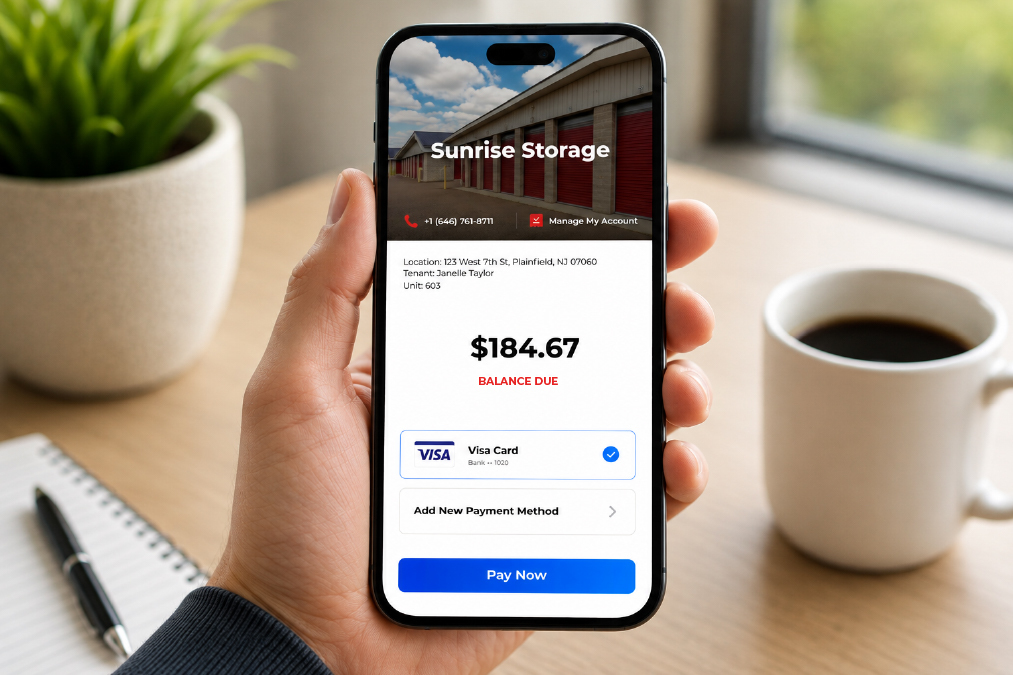
In a modern self-storage operation, automation can often be applied to tasks that take up time and resources. For example, payments could be processed automatically instead of being chased down on the phone. Gate access and unit activity are tracked through software without manual input. Reporting is generated in real-time with facility-level dashboards rather than pulled together manually at month end.
Consider the time spent on late payment follow-up alone. A property manager spending even 20-30 minutes daily calling tenants about overdue balances quickly adds up over the course of a month. That’s time that could be spent working with prospective customers or addressing maintenance issues.
Automated payment reminders and processing reduce that workload to just handling true exceptions.
Over time, these tasks pull focus away from revenue-generating activities and strategic planning. Streamlining routine workflows through better systems and automation reduces errors and frees up hours that often go unaccounted for on the P&L.
Facilities that wait for something to break usually end up paying more to fix it. Small issues compound when they are ignored, leading to emergency repairs, downtime, and frustrated tenants.
A simple monthly walk-through checklist can prevent most emergency calls: checking gate motors, testing keypad systems, inspecting door mechanisms, and replacing burnt-out lights. Scheduling regular HVAC filter changes, for instance, can reduce service calls and extend equipment life—a relatively inexpensive preventive task that helps avoid premature equipment replacement.
A consistent maintenance cadence helps control costs by addressing problems early, keeping equipment running longer, and avoiding the premium pricing that comes with urgent service calls.
Operational efficiency improves quickly when owners can see what is happening across the business. Tracking key metrics like occupancy trends, delinquency, utility usage, and marketing performance allows small issues to be addressed before they turn into larger expenses.
It’s good practice to set up a monthly "numbers review" routine, even if just 30 minutes reviewing your P&L against the prior month and prior year. Look for line items that show unexpected jumps. A sudden spike in water usage might indicate a leak. A jump in marketing spend without corresponding move-ins signals wasted budget. Catching these patterns early prevents small overages from becoming permanent fixtures in your budget.
Regular review of financial statements and operational reports makes it easier to spot anomalies, track spending patterns, and identify opportunities to reduce waste.
When vendors are chosen on the fly, pricing becomes inconsistent, and costs drift upward. Establishing reliable vendor relationships and standard purchasing practices creates predictability. Over time, consistent pricing, negotiated rates, and fewer surprises help keep operating expenses under control and make budgeting easier.
For instance, negotiating annual contracts with locksmiths, HVAC technicians, and cleaning services often locks in discounted rates and priority service. Ordering supplies like locks in bulk rather than calling when each unit needs service can reduce per-unit costs. Maintaining an approved vendor list also means you're not scrambling to vet contractors during emergencies—when your leverage is lowest, and prices can be highest.
Together, these changes create an operation that runs with intention instead of reaction. Costs become easier to manage, decisions feel more confident, and the business requires less intervention to stay on track.
Most of the time, operational costs do not get out of hand because owners are doing something wrong. They grow when everyday decisions stack up without enough structure behind them. Over time, that shows up as tighter margins and a business that feels harder to manage than expected.
At White Label Storage, our focus is on making your facility more profitable, which includes improving efficiency.
We take a close look at how the facility actually runs day to day, from staffing and systems to maintenance and vendor management. The goal is to remove friction, reduce waste, and make the operation easier to manage without sacrificing performance.
Ready to learn how we can help your property control expenses? Request a free proforma for your facility.