If a potential tenant calls you and gets voicemail, they don't leave a message—they hang up and call the next facility down the street.
If that competitor answers, they win the lease. It didn’t matter that your facility was cleaner, safer, or had better rates. You lost the deal simply because you weren't there to say "hello."
It’s tempting to think you can just "call them back" later. Many owners juggle phones while fixing a gate, helping a customer, or handling a move-out, trusting that a voicemail will do the job. But storage decisions often happen during moments of change. People may be moving, downsizing, or navigating life transitions, and they want to speak with a real person right away.
According to industry data cited by Inside Self Storage, nearly 60% of customers will rent from the first facility that answers the phone.
And when you miss that moment, the cost is higher than you think. It’s not just a missed conversation; it’s a missed lifetime value. If a tenant stays for 12 months at $150/month, that single unanswered ring just costs you $1,800.
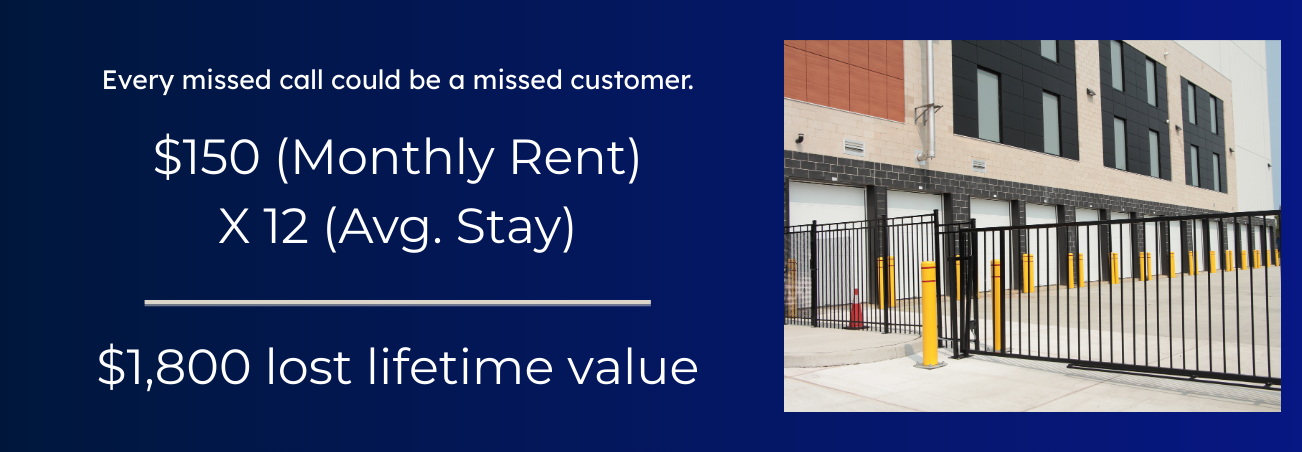
Multiply that by a few missed calls a week during volume spikes like the first of the month or the summer rush, and you are quietly bleeding revenue simply because one person can't be in two places at once.
Reliable call handling is what protects those opportunities and turns inquiries into move-ins.
Most owners start with a simple thought: "I’ll just hire someone to answer the phones."
It sounds straightforward, but "answering the phones" is very different from turning the majority of incoming calls into new tenants. When you decide to bring this function in-house, you aren't just hiring a receptionist; you are building a new department from the ground up.
If you are committed to doing this yourself, here is the blueprint of what actually goes into it.
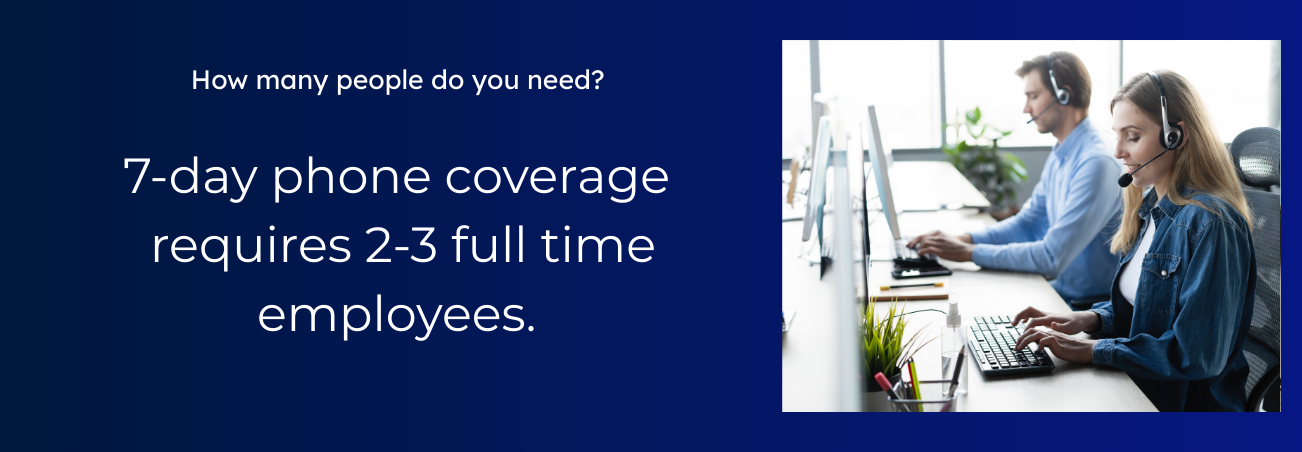
The biggest shock for most operators is the headcount required. You might think you need one person for a standard 40-hour work week. But self-storage doesn't stop at 5:00 PM.
You can’t just tell a new hire to "be friendly and sell units." You need a structured playbook that turns inquiries into leases.
A shared cell phone or basic landline for the office won't cut it. Especially as call volume increases. To build a scalable system, you need the right tech stack.
This is the part most people forget. To truly manage a call center, you have to measure the results to know if your investment is paying off.
When you run the numbers, it’s easy to stop at the hourly wage. You take $18/hour, multiply it by 40, and think you’re done. But the real cost of an internal team is usually much higher.
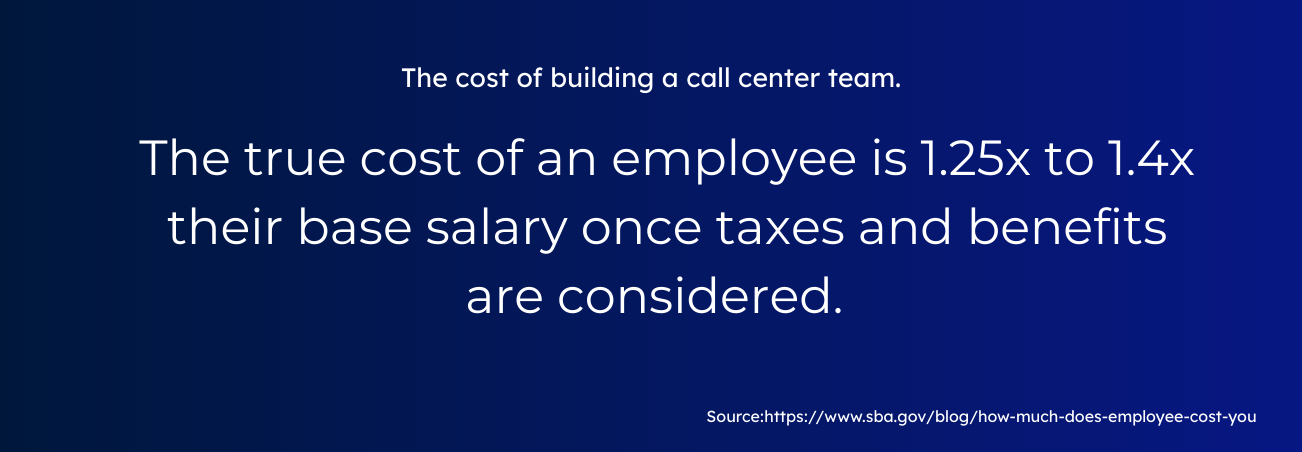
According to the Small Business Administration (SBA), the true cost of an employee is typically 1.25 to 1.4 times their base salary once you factor in taxes and benefits.
That cost adds up in a few key areas.
Finally, consider the cost of inconsistency. If your one agent is sick or overwhelmed, calls go unanswered. Unlike a professional center with a full team to absorb volume, a DIY setup has no safety net. One bad day doesn't just mean a headache for you; it means lost leases and revenue you can’t get back.
There is a tipping point where "doing it yourself" stops saving money and starts stalling growth. Usually, it happens when you acquire a second location, hit the summer rush, or simply realize that managing a call center team is a full-time job you didn't sign up for.
That is usually the moment owners look for a partner.
At White Label Storage, we understand this balance because we are operators ourselves. We provide a range of management solutions, but our Self Storage Call Center service is designed specifically to give you professional-grade support without the operational headache.
When you plug into our support team, you get:
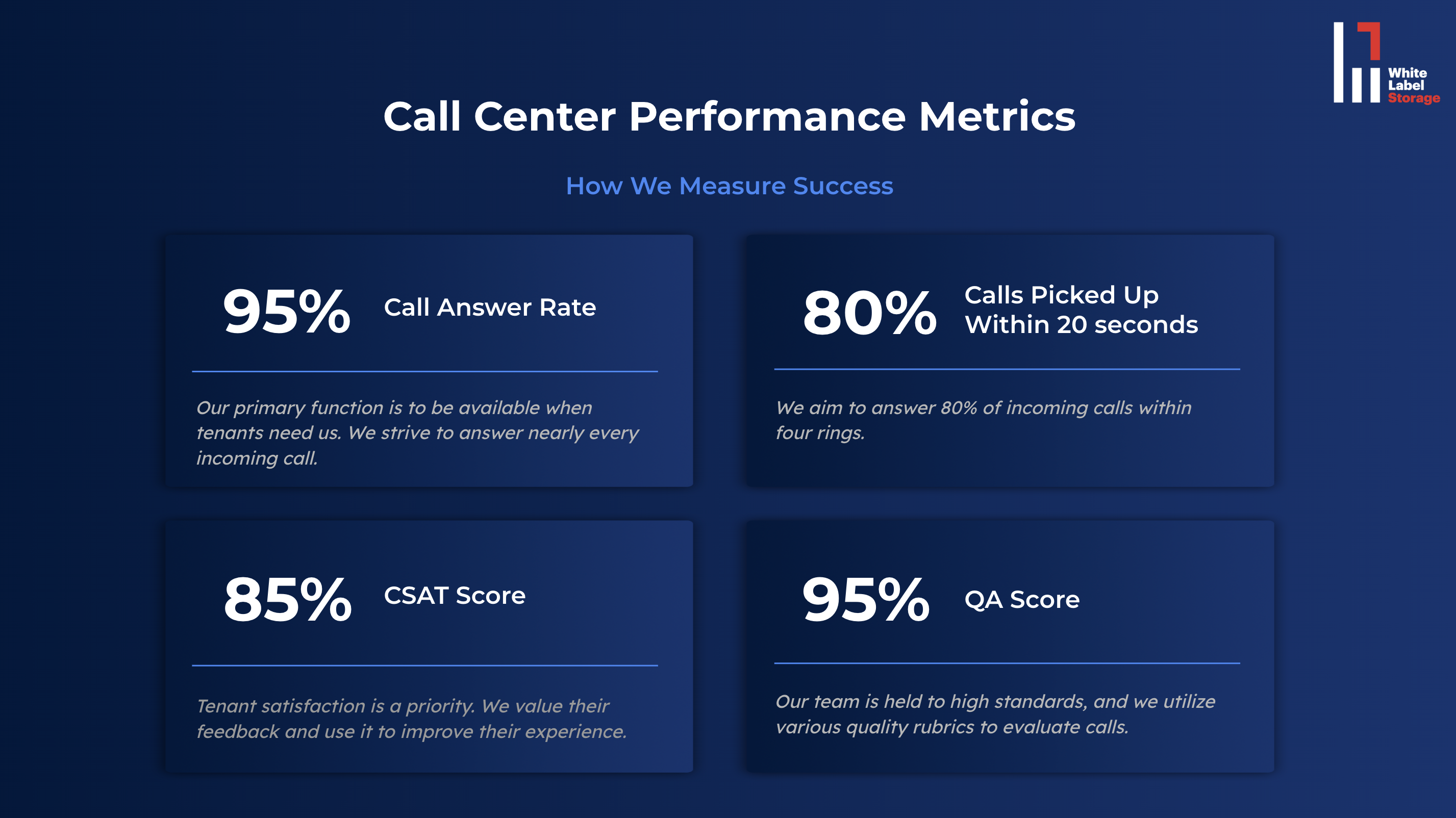
We also have performance metrics that track our team's effectiveness and allow us to continuously improve our performance. Here's a snapshot of how our call center performs across our portfolio:
Managing calls shouldn’t pull you away from running your facility. By putting the right remote management infrastructure in place, whether in-house or outsourced, you ensure that your business is ready to scale when the next opportunity calls.
To find out more about how our call center can help your facility close more leads, schedule a demo with our team.