
Cities and local governments across the country have been making deliberate decisions about where and when self-storage can be built, and those decisions are quietly reshaping the development landscape.
According to Yardi Matrix, new supply is forecast to fall to 2.4% of total stock in 2026, down from 3.0% in 2025 and well below the long-term average of 4.2%.
That kind of pullback does not happen in a vacuum. Zoning restrictions, moratoriums, and outright bans are part of that story, and understanding where they’re happening and why can separate investors who get caught off guard from those who make informed investment decisions.
This post gives you the fuller picture of where self-storage restrictions are emerging, what is driving them, and what to keep in mind as the landscape continues to change.
To understand what is happening, it helps to understand why it is happening. Cities are not pushing back on self-storage arbitrarily. A few recurring arguments keep showing up in city council meetings and planning commission hearings across the US, and these debates often lead to restrictions on self storage construction.
Once you recognize them, you will start spotting the pattern before it turns into legislation.
Self-storage facilities are operationally lean by design. A facility does not usually require large staff, have heavy foot traffic, or need a complex operating model to perform well.
This is great for owners and operators but does not score many points with local government.

Usually, when a city council looks at a vacant parcel, they are not just thinking about what is being proposed for that space. They are thinking about what the community gets out of it. A business that employs a handful of people and generates little to no sales tax is going to have a harder time competing for that land than one that brings jobs, draws foot traffic, and contributes meaningfully to the local tax base.
That is the lens self-storage gets evaluated through, and in markets where economic development pressure is high, it is a lens that does not always work in the industry's favor.
For example, the city of Lincolnwood, Illinois spent five months studying how eight neighboring communities handle their self-storage zoning before voting to remove it as an allowable use in commercial and manufacturing areas, specifically to preserve space for businesses that generate more tax revenue.
That kind of decision-making is becoming more and more common.
In cities where housing supply is already stretched thin, self-storage has become an easy target.
Local officials are increasingly being asked to justify every acre of developable land, and a storage facility is a difficult thing to defend when a housing crisis is happening. The math feels simple from the council chambers: land is finite, the waitlist for affordable housing is ever-growing, and a storage facility does not help solve that problem..
When Providence, Rhode Island enacted its ban, the city's majority whip made the position plain, saying the goal was to choose housing people over storing things.
Whether operators agree with that framing or not, it is important to understand it. In dense markets, housing needs will continue shaping how cities evaluate land use.
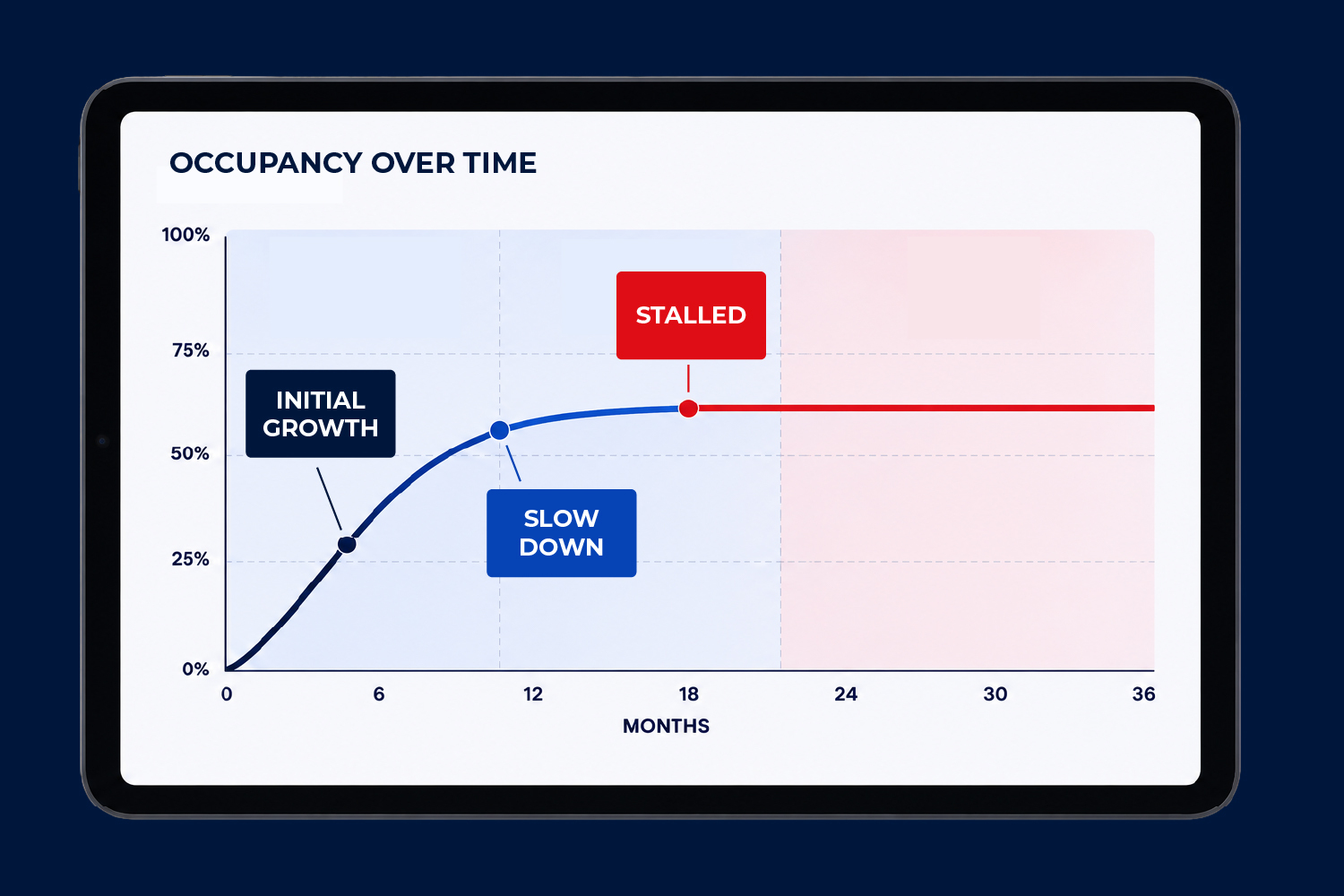
When a city starts receiving multiple storage development applications in a short window, the reaction is often to pump the brakes and figure out what is actually happening.
That pause usually comes in the form of a moratorium, which is essentially a temporary freeze on new development while local officials take stock of what is already there, what is coming, and whether current zoning still reflects what the community actually wants.
Some moratoriums lift and others lead to tighter zoning requirements that make future development harder to get approved. And some harden into permanent restrictions that remove self-storage as an allowable use in certain zones altogether.
What makes this particularly frustrating for the industry is that the concern is not always grounded in real demand data. A lot of this activity has played out in secondary and tertiary markets where local perceptions of self-storage simply have not kept pace with how much the product has actually evolved.
Now, none of this means self-storage is suddenly a weaker asset class. It means the conversation around self-storage development has matured and in some cases has grown more complicated. However, the people who go into those conversations prepared are the ones who come out ahead.
Understanding the reasoning behind the pushback is one thing. Knowing where it is actually showing up is another.
The table below tracks cities that have passed legislation restricting, limiting, or outright banning new self-storage development. Some of these are permanent policy changes. Others started as temporary moratoriums that have since evolved. A few are still working through the process.
One thing worth noting before you dig in: this list is not exhaustive, and the landscape shifts. A city that has a moratorium today may lift it in six months, and a city not on this list today could be added tomorrow. Always verify current zoning requirements directly with local authorities before making any investment decisions.
Last Updated May 2026: The information below is compiled from publicly available sources and updated on a regular basis. Zoning laws and municipal ordinances can change quickly, and some restrictions may have been lifted, modified, or expanded since this was last updated. This is intended as a starting point for research, not a substitute for direct verification with local planning departments or legal counsel.
A few things stand out when you look at these lists as a whole:
When you look at these lists, you can see something clear pretty quickly: every single entry has different reasoning behind it and a different type of restriction attached to it.
In conversations around investing, these things have a way of getting lumped together, and the assumption becomes that any restriction means the same thing: self-storage is not welcome here. But that is not always the case. Some of these restrictions can lift, turn into something more permanent, and some barely affect the market at all depending on where a facility already sits.

There is a real spectrum to how you should read what is on that list, and understanding where a city falls on it matters especially if you are actively considering putting money into a market or already have a facility there.
This is the most serious outcome, and the one that tends to make headlines. An outright ban removes self-storage as a permitted use in specific zones or across the city entirely.
Providence is the clearest example on this list, where the city voted to prohibit new development in the zones where it had previously been allowed without issue. For existing facilities, operations continue. For anyone looking to build something new in those areas, the conversation is effectively over. When a city reaches this point, it has usually moved past the study phase and made a deliberate policy decision about what it wants its land used for.
A zone exclusion is more surgical than a full ban. Self-storage is not eliminated from the city entirely, but it is pushed out of specific districts, typically commercial, downtown, or mixed-use zones, and redirected toward industrial areas.
Chicago's 2025 ordinance is the most recent and high-profile example of this. Facilities can still be built, just not everywhere they once could. For investors, this is worth understanding carefully because it does not close a market. In some cases it actually concentrates future development into fewer permissible areas, which over time can work in favor of operators who are already positioned there.
A moratorium is a pause, not a permanent answer. Cities use them to buy time while they study the issue and figure out what they actually want their long-term policy to look like.
The outcome can go either way. Some moratoriums lift cleanly with no lasting change to local zoning. Others become the first step toward something more permanent. The ones worth watching closely are the ones where council members are already using language around housing shortages, job creation, or economic development priorities, because those conversations tend to harden into policy. A moratorium on its own is not a red flag, but it is a signal worth tracking.
A special use permit requirement does not ban self-storage outright but adds a meaningful layer of process between a developer and breaking ground. Getting approved typically means going through formal public review, community hearings, and in some cases a full council vote before anything moves forward.
New York City's approach in its Industrial Business Zones works this way. Development is still technically possible, but the timeline stretches, the outcome becomes less certain, and the cost of pursuing a project increases. For investors underwriting a new development, that added uncertainty has to be factored into the deal from the start.
Conditional restrictions are the most varied category on this list. They do not ban development or require special approval, but they impose specific conditions that shape what can be built and where.
Cape Coral now requires a one-mile separation between facilities and prohibits storage on the ground floor of any new development. Denver bans storage within a quarter-mile of light rail stations. Sacramento restricts it along certain commercial corridors. These conditions do not close a market, but they can make a site that looks viable on paper much harder to execute in practice. A parcel that clears every other hurdle can fail on a single proximity requirement.
A list of cities with restrictions is useful. But a strategy for what to do about it is what actually moves the needle for your portfolio. Knowing where the friction is only matters if you know how to factor it into your decisions — whether you are evaluating a new market, underwriting a deal, or already operating in a city that is starting to shift. Here are the things worth keeping in mind as you do that:

Cities will keep making decisions about what gets built and where. Some of those decisions will favor self-storage and some will not. What does not change is the underlying demand, the resilience of the asset class, or the value of having the right self storage management company in your corner when the regulatory environment around a market starts to move.
The markets worth being in still exist. The deals worth doing are still getting done. The investors who thrive from here are not the ones who found markets with zero friction. They are the ones who knew what to do when they encountered it.